Hantavirus situation in the Canary Islands
No alertThere are currently no confirmed hantavirus cases in the Canary Islands.
Monitoring continues through official health sources and verified international updates.
Ebola situation in the Canary Islands
No alertThere are currently no confirmed Ebola cases in the Canary Islands.
The situation is monitored through WHO, ECDC and official health sources.
Monitoring areas
04/06/2026 — The Canary Islands Government, through the Directorate General for Emergencies, has declared a wind pre-alert situation across the archipelago from 00:00 on Thursday, June 4.
This decision has been taken based on information provided by the State Meteorological Agency and other available sources, under the Canary Islands Specific Emergency Plan for Risks from Adverse Meteorological Phenomena.
Affected areas: Gran Canaria, in summit areas and the east, south and west; La Palma; La Gomera; El Hierro; Tenerife, in the north, east, south and west; Lanzarote and Fuerteventura.
Northeasterly winds are expected, affecting summit areas and the southeastern slopes of the mountainous islands. The northwestern slopes of La Palma, La Gomera and Gran Canaria, as well as the far west of El Hierro and Tenerife, are also included.
Maximum gusts of 70 km/h are expected, locally exceeding 80 km/h. In Lanzarote and Fuerteventura, northeasterly winds will mainly affect the southern slopes. Caution is advised when travelling, exposed objects should be secured, and Civil Protection guidance should be followed.
Viruses
COVID-19, influenza, bronchioliti, flu, Hantavirus
Infections and sexual health
HIV, chlamydia, gonorrhoea, syphilis and other transmissible infections.
Travellers and tourism
Updates and recommendations for residents and travellers.
Ultraviolet radiation risk
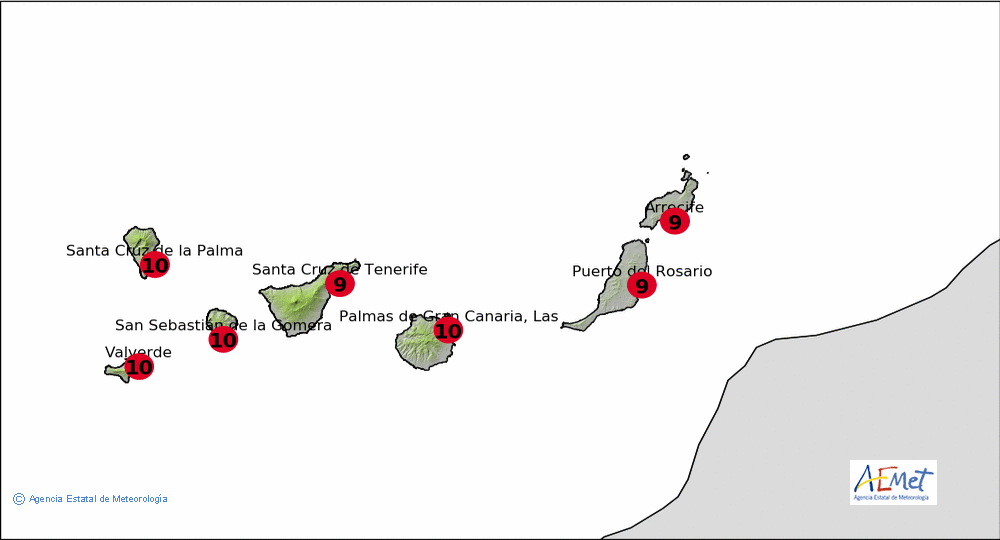
18/09/2026:
Public Health reminds that protecting yourself from the sun is a responsibility that should be maintained not only during summer, but throughout the entire year, even on cloudy days. When the health risk from exposure to solar radiation reaches these levels (very high and extreme), it is recommended to reinforce protective measures: use daily sunscreen with SPF 50 or higher, stay in shaded areas during the central hours of the day, wear wide-brimmed hats and clothing that covers arms and legs, use appropriate sunglasses, and ensure both adults and children are protected from the sun.
Hospitals and healthcare
Recommended sources
The site avoids sensationalism and clickbait.
